
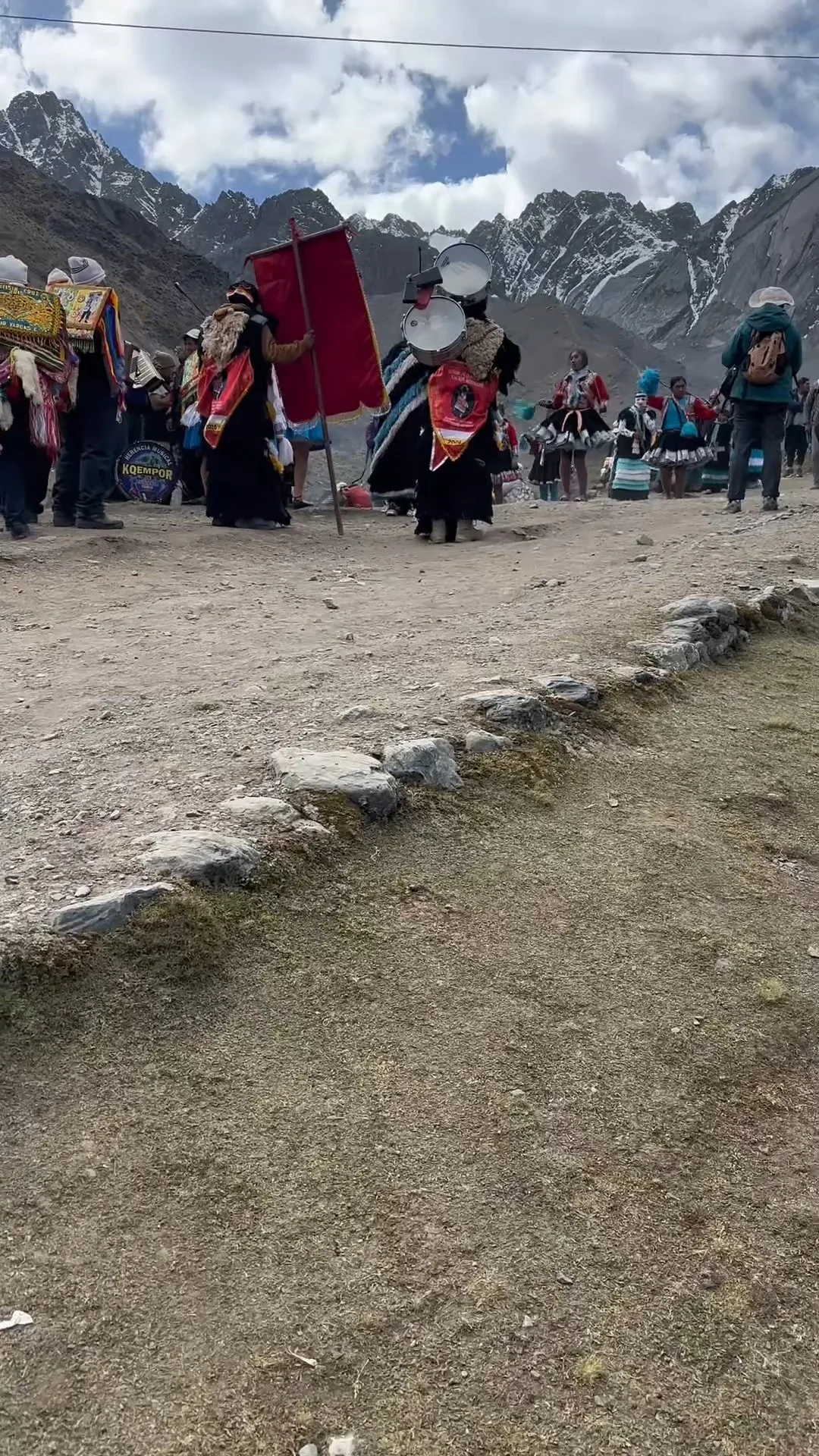
The Experience at the Sanctuary of Señor de Qoyllurit'i
The pilgrimage to the heights of the Vilcanota mountain range represents one of the most profound religious and cultural manifestations of the Andean realm in the department of Cusco, Peru. Through the testimony shared under the record «Experiencia en el santuario del Sr. de Qoylluriti», Ramiro Ponce de León documents the firsthand experiences of his visit to the sanctuary during the year 2026. Far from constituting a musical piece or a concert composition, the recorded work is configured as a first-person logbook, focused on the effort to capture and share the atmosphere of devotion that annually brings together thousands of devotees and dancers.
The account focuses on the direct experience of the trail and the interaction with environmental elements. In the traditional celebrations of Señor de Qoyllurit'i, the confluence of comparsas, rites of Catholic devotion, and ancestral ties with the snow-capped apus forms a unique setting. The testimonial perspective provided in this material highlights the uniqueness of each journey, underscoring the determination to return in future editions, such as the one planned for the year 2027, maintaining a firm intention to share the communal experience that characterizes this festivity.
Logistical Challenges and the Journey to Mahuayani
One of the central cores of the testimony documents the logistical challenges associated with staying and communicating in a high-mountain environment. The author describes the technical difficulties arising from the lack of electrical power supply at the sanctuary during the dates of his stay. This contingency directly affected the live broadcasts he made to his community of followers, forcing him to reorganize his operational activities on the ground.
To ensure the continuity of the audiovisual documentation, it was necessary to undertake a temporary return to the town of Mahuayani in order to recharge batteries and portable power banks. Geographically, the locality of Mahuayani constitutes the neuralgic land access point from which pilgrims begin the trek on foot toward the sanctuary. This travel highlights the material conditions surrounding testimonial coverage work in remote areas, where basic infrastructure is limited and physical exertion adds to technical setbacks.
Cultural Context and Documentary Delimitation
The editorial analysis of the presented material corroborates the authenticity of the described geographical and cultural references. The sanctuary of Señor de Qoyllurit'i and the town of Mahuayani are elements firmly anchored in Cusco's geographical reality and in the religious anthropology of Peru. However, it is imperative to distinguish between these verifiable facts of regional tradition and the personal circumstances narrated by the author, such as the power outage or the specific trips to charge mobile devices, which strictly belong to his unverified individual experience.
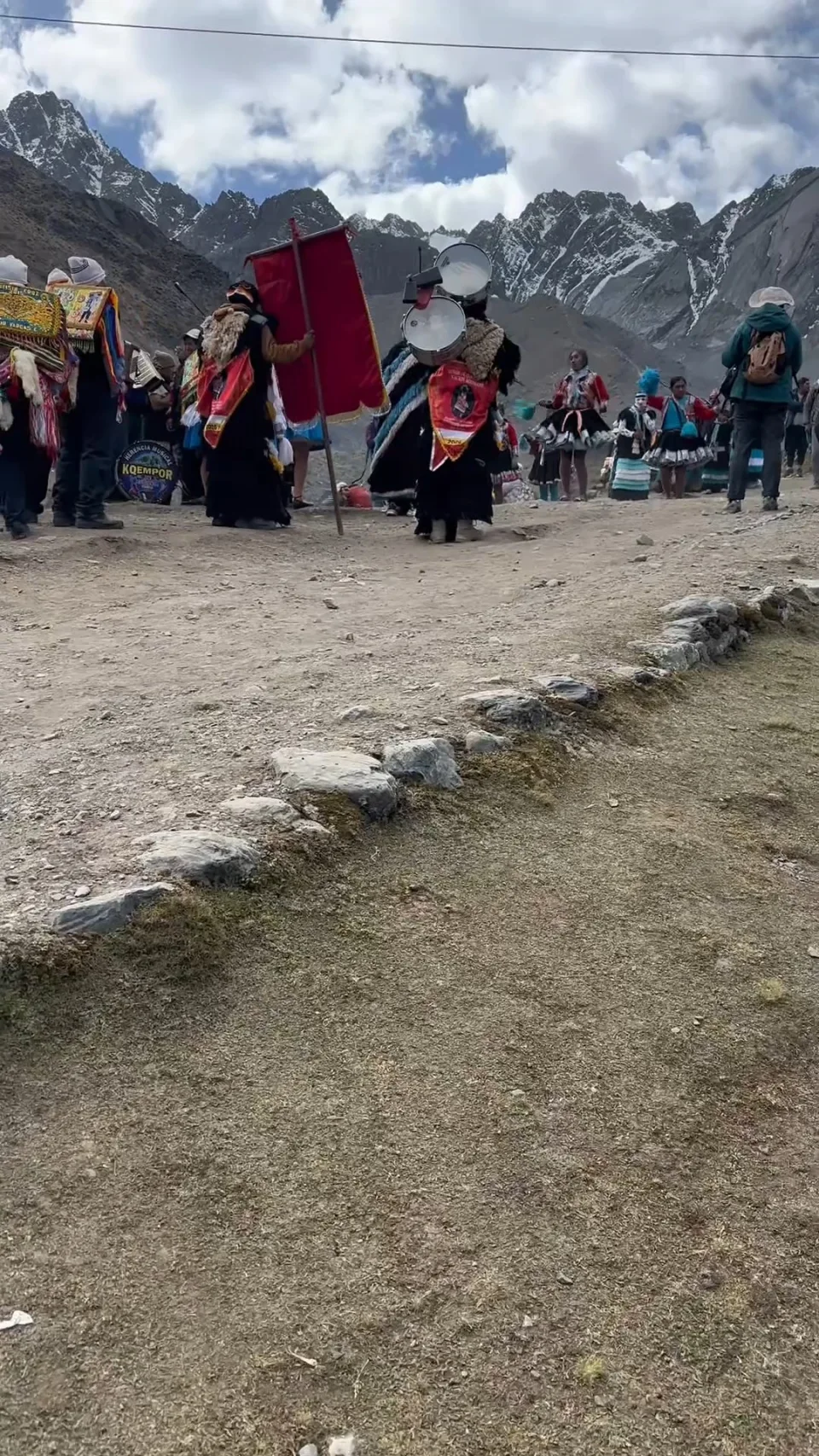
Likewise, it should be clarified that the record entitled «Experiencia en el santuario del Sr. de Qoylluriti» does not correspond to a musical work, sheet music, or artistic composition subject to phonographic registrations or collective management organizations. On the contrary, it is a verbal and visual testimonial chronicle. The image attached as documentary context reflects the usual festive atmosphere of the area, featuring participants dressed in traditional costumes, banners, and percussion elements set against the mountain range, illustrating the scenic background within which both the author's broadcasts and the Andean pilgrimage are framed.
Testimonial Perspective and Commitment to Documentation
The author's explicit intention lies in bringing his audience closer to the direct pulse of the festivity, embracing the vicissitudes of field work as an inherent part of the journey. The expressed commitment to resume the journey in coming years demonstrates the persistence of a devotional and communicative practice that transcends mere technical difficulties.
This testimony offers a contemporary window into how current technological tools, such as digital broadcasts and power banks, interact with centuries-old traditions in demanding geographies. Through this record, the daily experience of the communicating pilgrim is captured as a testimony of Andean devotion and perseverance in the face of environmental challenges.
Creative credits
Creative credits
- Version, production and tools
- Testimonial account and field recording by Ramiro Ponce de León; editorial writing and structuring assisted by artificial intelligence.
AI translation of the original Spanish article. The author’s voice and cited sources remain in their original language.

Author’s contribution
I am Ramiro, from Cusco, an entrepreneur passionate about music and technology. I enjoy giving new life to popular songs through symphonic reinterpretations using artificial intelligence. At RAMIROBIZ, I share my creations and projects:
Editorial process
Text based on the testimonial account of Ramiro Ponce de León, cross-referenced with geographical and cultural information about the festivity of Señor de Qoyllurit'i in Cusco, Peru. The writing was processed with artificial intelligence assistance without inventing unsupported data.
Editorial history
Published 13/10/2026. Updated 18/10/2026.